

Communication isn’t just about knowing how to speak well or choosing the right words. Real communication is about being able to express your ideas clearly, understand the person in front of you, and deal with different personalities and situations without misunderstandings or tension. That’s why communication skills are considered one of the most important skills you can develop in your life, whether at work, in relationships, friendships, job interviews, or even in simple everyday interactions. You can be a very smart person with a lot of experience, but if you don’t know how to express your ideas, listen to others, or handle disagreements, you may find that your abilities don’t always come across to people in the right way.
What Are Communication Skills?
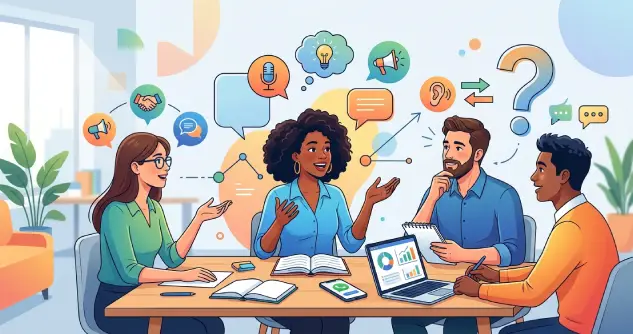
Communication skills are a set of abilities that help you exchange information, ideas, and feelings with other people in a clear and effective way. Communication isn’t just about talking. When you’re talking to someone, many things can affect the message they receive, such as:
- The words you use.
- Your tone of voice.
- Your facial expressions.
- Your body language.
- How you listen.
- The timing of what you say.
- Your ability to understand the other person’s feelings.
- Your ability to ask questions.
- How you deal with differences.
You might say a very normal sentence, but the way you say it can make the other person understand it completely differently. That’s why someone with strong communication skill isn’t necessarily the person who talks the most. They’re usually someone who knows when to speak, when to listen, what to say, and how to say it.
Why Are Communication Skills Important?

Communication skills affect almost every part of your life.
1. They Improve Your Relationships
When you know how to express your feelings and needs clearly, the chances of misunderstandings become much lower. Instead of saying:
You never understand me.
You could say:
I feel like you’re not listening to me when you change the subject while I’m talking.
The difference is that the second sentence explains the problem instead of attacking the person.
2. They Help You at Work
In the workplace, good communication is very important for:
- Meetings.
- Dealing with your manager.
- Working with colleagues.
- Communicating with customers.
- Presenting ideas.
- Solving problems.
- Negotiating.
- Delegating tasks.
- Giving and receiving feedback.
Someone who can explain their ideas clearly is usually easier for others to understand and work with.
3. They Boost Your Confidence
When you know how to express yourself, you’ll feel less afraid to share your opinion, ask for what you deserve, or take part in a discussion.
Confidence doesn’t mean being the loudest person in the room. It means feeling comfortable expressing yourself, even when the person in front of you disagrees with you.
4. They Help You Handle Conflicts
Disagreements are a normal part of life. The problem isn’t that disagreements happen, but how you deal with them. Someone with good communication skills can separate between:
I disagree with your opinion.
and
I disagree with you as a person.
And that’s a very big difference.
5. They Help You Build Stronger Professional Relationships
Communication skills aren’t only important for everyday conversations. They’re also a key part of building professional relationships, networking, job interviews, and dealing with customers and colleagues.
The Main Types of Communication Skills
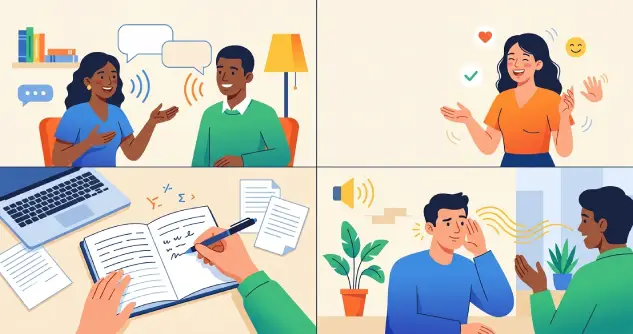
Communication isn’t just one skill. It’s a group of connected skills.
1. Verbal Communication
This is communication through spoken words. It’s about how you use words to get your idea across. Good verbal communication requires you to:
Be clear.
Choose the right words.
- Avoid unnecessary complicated language.
- Organize your thoughts.
- Know what you want to say and why.
- Speak in a way that fits the person and the situation.
For example, the way you talk to your friend doesn’t have to be the same way you talk to your manager or a customer. It’s not about being a different person, but about knowing how to adjust your communication style depending on the context.
2. Nonverbal Communication
Nonverbal communication includes all the messages you send without directly using words. Examples include:
- Facial expressions.
- Eye contact.
- Body posture.
- Hand gestures.
- The distance between you and the other person.
- Tone of voice.
- Speaking speed.
You might say:
I’m listening to you.
But at the same time, you’re looking at your phone. In this case, your words are saying one thing while your behavior is saying something else.
That’s why effective communication requires your words and body language to be consistent with each other.
3. Listening Skills
Listening is one of the most important parts of communication skills, yet many people focus on talking and forget about listening.
Real listening isn’t just staying quiet until the other person finishes talking so you can have your turn. It means trying to understand:
- What is the person saying?
- What do they really mean?
- How do they feel?
- What do they need?
- Is there something they’re unable to say directly?
Signs of good listening include not constantly interrupting, asking clarifying questions, and repeating or rephrasing what the person said when you need to make sure you understood them correctly.
For example:
So, you think the main problem isn’t the work itself, but the time pressure?
This kind of question shows that you were actually paying attention to what they were saying.
4. Written Communication
Written communication has become an essential part of our lives, especially with emails, messages, chats, and professional communication. A good written message should be:
- Clear.
- Relatively concise.
- Well organized.
- Appropriate for the person reading it.
- As free from ambiguity as possible.
Before sending an important message, ask yourself:
If this person reads the message without hearing my tone of voice, could they misunderstand it?
If the answer is yes, rewrite it.
5. Emotional Communication
Emotional communication means knowing how to express your feelings and understand other people’s emotions.
For example, instead of saying:
You’re so annoying.
You could say:
I’m upset about the way that conversation went.
The second sentence expresses how you feel without turning the situation into a personal attack.
6. Assertive Communication
Assertive communication is one of the most important skills you need to learn. It means being able to express your opinions, needs, and rights without being aggressive or ignoring yourself just to please other people. There’s a difference between:
Passive Communication:
- Staying quiet about what bothers you just to avoid a problem.
- Aggressive Communication:
- Forcing your opinion on someone and attacking them.
- Assertive Communication:
- Expressing your position clearly and respectfully.
For example:
I understand that you need help, but I won’t be able to finish this task today. I can start working on it tomorrow.
That’s an assertive statement without being aggressive or overly apologetic.
The Most Important Communication Skills You Need to Develop
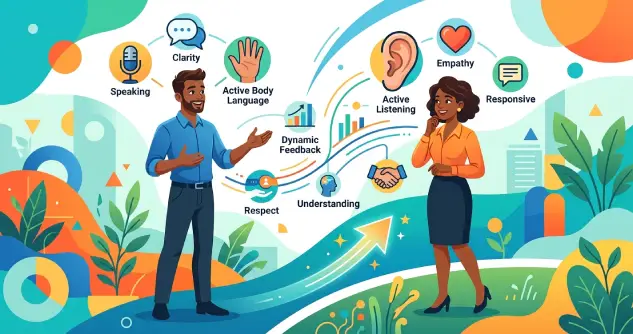
Communication skills aren’t just one skill. They’re a group of skills that shape your ability to express yourself, understand others, and handle different situations with confidence and calm. There are several essential skills that can make a real difference in your personal relationships and professional life.
Active Listening
If you want to improve your communication, start with listening. When someone is talking to you, try not to prepare your response in your head while they’re still speaking. Actually pay attention to them. Put your phone away if the situation is important, look at the person, and let them finish their thought.
Asking Questions
People who know how to ask good questions are usually better at understanding others. Instead of making assumptions, ask questions. Instead of saying:
Are you upset with me?
Try:
You seem a little upset. Did something happen?
Open-ended questions can also encourage the other person to talk more, such as:
- What happened from your point of view?
- What’s bothering you the most?
- What solution do you think would work?
Clarity
Being unclear is one of the biggest causes of misunderstandings. If you want someone to do something specific, try to be clear and specific.
Instead of:
Finish it quickly.
Say:
I need the file today before 4 PM.
The clearer your expectations are, the less likely misunderstandings will happen.
Empathy
Empathy doesn’t mean that you have to agree with someone about everything. It means trying to see the situation from their point of view.
You could say:
I don’t see it the same way you do, but I understand why you see it that way.
This kind of statement can make the other person less defensive and open the door for a better conversation.
Controlling Your Tone of Voice
The same sentence can have a completely different meaning depending on your tone of voice.
For example:
Whatever you want.
You can say it in a way that genuinely means It’s up to you, or you can say it in a way that actually means I’m really upset with you.
That’s why you need to pay attention not only to the words you use, but also to how you say them.
Body Language
Your body language can either support what you’re saying or weaken it.
Try to:
- Maintain natural eye contact.
- Avoid closing yourself off in a defensive way.
- Face the person while talking.
- Use natural hand gestures.
- Avoid being distracted by your phone.
- Keep your facial expressions appropriate for the situation.
How to Develop Your Communication Skills
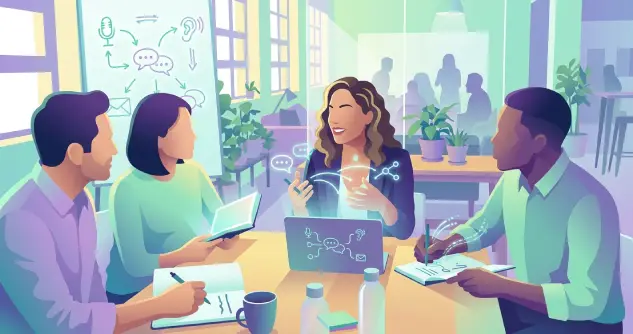
Improving your communication skills doesn’t happen overnight. It’s a skill that gets better through practice and self-awareness.
Step 1: Observe Yourself
Start paying attention to the way you communicate. After any important conversation, ask yourself:
- Was I clear?
- Did I interrupt the other person?
- Was I a good listener?
- Was my tone of voice appropriate?
- Did I actually say what I wanted to say?
- Could my words be understood in a different way?
Being aware of your behavior is the first step toward changing it.
Step 2: Interrupt Less
If you have a habit of interrupting people, work on it gradually. When the person finishes speaking, wait a second or two before responding. Those few seconds give you a chance to process what they said instead of reacting automatically.
Step 3: Think Before You Speak
You don’t have to respond immediately to everything, especially in sensitive situations.
You can simply say:
Give me a minute to think.
That’s much better than giving a quick response that you might regret later.
Step 4: Use I Instead of You
When you’re talking about a problem, try to focus on your own experience instead of blaming the other person.
Instead of:
You always ignore me.
Say:
I feel ignored when you’re talking to me but you’re not really paying attention.
This makes the other person feel less attacked and makes the conversation easier.
Step 5: Learn to Say No
Being able to say no is an important part of communication skills. You don’t have to give a long explanation every time you refuse a request. You can simply say:
I can’t do that right now.
Or:
Unfortunately, this isn’t a good time for me.
Or:
I won’t be able to commit to this.
A clear and respectful no is much better than saying yes and then avoiding the person or failing to follow through.
Common Communication Skills Mistakes
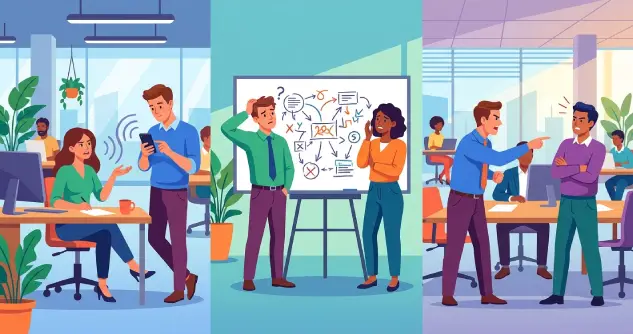
- Listening Just to Respond, Not to Understand
This is one of the most common problems. The person is simply waiting for their turn to speak instead of actually paying attention to what the other person is saying.
- Assuming Someone’s Intentions
Not every action means something specific. If someone doesn’t reply to you, it doesn’t necessarily mean they’re ignoring you. Before jumping to conclusions, ask.
- Using Generalizations
Words like:
Always.
Never.
Every time.
You never…
often make the other person defensive instead of helping them focus on the actual problem.
- Choosing the Wrong Time
Even the best words can fail if you say them at the wrong time. If the other person is very angry, in a hurry, or busy, it might be smarter to postpone the conversation.
- Talking While You’re Angry
Anger can affect your choice of words, tone of voice, and the way you think. If you feel like you’re losing control, take some time to calm down before continuing the conversation.
- Overexplaining
Sometimes we try to explain our position more than necessary because we want the other person to understand or agree with us.
But talking too much can actually make your message weaker. Say what you need to say clearly, then give the other person some space to respond.
Communication Skills in the Workplace
At work, communication skills can make a big difference in how people see your competence.
Communicating with Your Manager
When talking to your manager, try to be clear and direct.
If you have a problem, don’t just say:
This isn’t working.
Instead, you could say:
I’m having a problem with the current deadline because of this, and I suggest we move the deadline to this date.
In other words, don’t just bring up the problem. Try to bring a solution or some alternatives with it.
Communicating with Coworkers
Not every disagreement needs to turn into a personal conflict. If you disagree with a coworker, focus on the idea itself. Instead of:
You don’t understand.
Say:
I think there’s another approach that might work better. Let me explain why.
Communicating with Customers
Customers don’t need to hear complicated terms to feel that you know what you’re doing. They need to know:
- What’s the problem?
- What’s the solution?
- How long will it take?
- What do you need from them?
- What’s the next step?
The clearer you are, the more trust you build.
Communication Skills in Personal Relationships
Good communication in relationships doesn’t mean talking all the time. Sometimes, the most important thing you can do is listen.
When the person in front of you is upset, they don’t always need a solution. Sometimes, they just need to feel understood.
Instead of saying:
It’s not a big deal. Don’t make it bigger than it is.
Try:
I understand that this is bothering you. Do you want to tell me more about it?
That’s a completely different way of handling the situation.
How to Deal With a Difficult Person to Communicate With
Not everyone is easy to communicate with. You may have to deal with someone who gets angry easily, constantly interrupts, attacks others, or refuses to listen.
- In these situations, try to:
- Don’t match their level of emotion.
- Speak calmly.
- Identify the actual problem.
- Don’t attack their personality.
- Use short and clear sentences.
- Set boundaries if their behavior is unacceptable.
- If the conversation isn’t going anywhere, pause it for a while.
For example:
I’m willing to continue this conversation, but not like this. We can continue when we’re both calmer.
That’s not giving up. It’s a skill for managing the situation.
How to Become a Better Communicator
You don’t have to be extremely social to be a good communicator. It’s more about the skill than your personality. Before an important conversation, try to answer three questions:
- What do I want to say?
- Why do I want to say it?
- What result do I want to achieve?
If you can answer all three, your message will probably be much clearer. Also, try to use examples instead of making general statements.
Instead of:
We need to improve our work.
Say:
We need to change the way we deliver the files to reduce delays.
The more specific and concrete your idea is, the easier it is for others to understand.
Can You Learn Communication Skills?
Yes, absolutely.
You don’t have to be naturally social or a fluent speaker to have strong communication skills. Someone can be very quiet and still be an excellent listener, clear, calm, and able to express themselves well.
Another person might talk a lot, but still have poor communication skills because they interrupt people, don’t listen, or aren’t clear.
That’s why communication skills aren’t about how much you talk. They’re about the quality of your communication.
A Daily Exercise to Improve Your Communication Skills
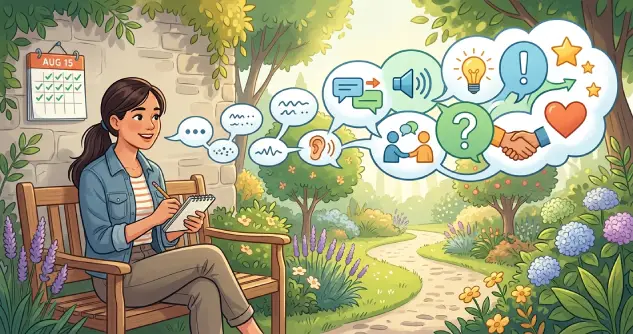
If you want to improve your communication skills in a practical way, it’s not enough to just read about communication skills and understand why they’re important. The most important thing is to start practicing them in your everyday life.
And so you don’t feel like it’s too difficult or like you need to change your whole personality at once, try a simple 30-day exercise.
The idea is to choose at least one conversation every day, whether it’s with a family member, a friend, a coworker, or even someone you’re just dealing with casually, and focus on just one communication skill.
At the end of the day, take a moment to think about what you did better and what you still need to work on.
Week 1: Active Listening
During the first week, focus on listening more and talking less.
When someone is talking to you, try not to interrupt them or prepare your response in your head while they’re still speaking. Let them finish their thought, then respond.
Also, try to notice not only what they’re saying, but how they’re saying it and what feelings might be behind their words.
Week 2: Clarity
During the second week, focus on how you express your ideas. Before you speak, ask yourself:
What exactly do I want to get across?
Then try to express your idea using simple, direct sentences instead of going into too many details that might confuse the other person.
If you’re asking for something, be specific. And if you’re explaining a problem, clearly explain what the problem is and what outcome you want.
Week 3: Body Language
The third week will focus on nonverbal communication. Pay attention to the way you stand or sit, your eye contact, facial expressions, hand movements, and tone of voice. Try to make sure your body language matches what you’re saying.
For example, if you tell someone:
I’m paying attention to you.
but you’re looking at your phone the whole time, your body language is sending a completely different message.
Week 4: Assertiveness
During the final week, work on Assertive Communication. This means learning how to express your opinions and needs without attacking anyone, while also not staying silent about your rights just to please others.
For example, practice saying no when you’re unable to do something, or disagreeing with someone’s opinion without turning the conversation into a personal argument.
You could say:
I understand your point of view, but I see it differently.
Or:
I would have liked to help you, but I won’t be able to commit to this right now.
Review Yourself at the End of Each Day
At the end of the day, take just two minutes and ask yourself:
- Did I really listen to the person in front of me?
- Did I interrupt them?
- Was I clear when I spoke?
- Was my body language appropriate?
- Did I express my opinion without attacking anyone?
- Was there a situation I could have handled better?
Then write a simple answer to this question:
What did I do better in my communication today?
And if something happened that you weren’t happy with, instead of blaming yourself, ask:
If this situation happens again tomorrow, what would I do differently?
The goal of this exercise isn’t to become perfect or make every conversation go perfectly. The goal is to start noticing the way you communicate and identify the habits that help you and the ones that hold you back.
With 30 days of consistent practice, you’ll start noticing that things you used to do automatically are now more under your control. You may find yourself responding more calmly, expressing yourself more clearly, and becoming better at understanding and dealing with other people.
Signs That Your Communication Skills Are Improving
You can tell you’re making progress when you start noticing that you:
- Listen more and interrupt less.
- Think before you respond.
- Can say no without feeling overly guilty.
- Can express your feelings clearly.
- Ask questions instead of making assumptions.
- Can disagree with someone without turning it into an argument.
- Can understand a point of view that’s different from yours.
- Can calm a conversation down instead of making it more heated.
- Find that people understand what you mean more often the first time.
- Stay calmer in difficult situations.
Final Thoughts
Communication skills aren’t just about knowing how to speak well. They’re about being able to listen, understand, express yourself, ask questions, negotiate, disagree, and set boundaries in a clear and respectful way. Most importantly, good communication doesn’t mean that everyone will agree with you or that you’ll be able to prevent every misunderstanding.
But as you improve your communication skills, you’ll become better at dealing with disagreements and difficult situations, and you’ll be able to express your ideas, feelings, and needs more effectively. Start with just one thing: listen more before you respond.
Then work on clarity, assertiveness, body language, empathy, and the way you express your feelings.With practice, something you once had to consciously work on will gradually become a natural skill that you use in every part of your life.
FAQs
What are 5 good communication skills?
Five important communication skills you can develop are active listening, clarity, empathy, nonverbal communication, and assertive communication. These skills help you understand the person in front of you, express your ideas and feelings clearly, and deal with disagreements without turning the conversation into a problem.
What are 10 communication skills?
Active listening.
Clear speaking.
Nonverbal communication.
Empathy.
Asking questions.
Controlling your tone of voice.
Assertive communication.
Being able to express your feelings.
Conflict resolution.
Written communication.
You don’t have to be great at all of these skills from the beginning. The impor
Some of the most important communication skills are:tant thing is to recognize your weak areas and work on each skill gradually.
What are the 7 skills of communication?
You can sum up the most important communication skills into seven basic skills: listening, speaking clearly, nonverbal communication, empathy, asking questions, assertiveness, and the ability to adapt to the situation and the person you’re talking to.
The way you communicate with a friend, for example, may not be the same way you should communicate with your manager, a customer, or someone you’re meeting for the first time.
What are good communication skills?
Good communication skills are the skills that help you get your message across clearly while also understanding the other person correctly.
Some of the most important ones include being able to listen without interrupting, express your opinion respectfully, ask questions instead of making assumptions, control your tone of voice, and handle disagreements calmly.
And someone with good communication skills isn’t necessarily the person who talks the most. In fact, they might be a very quiet person who knows how to listen, understand others, and choose the right words at the right time.